In the world of quads, few machines have reached legendary status. The LT500R is one of those beasts whose name alone makes true adrenaline junkies’ hearts race. Built over a short but intense period from 1987 to 1990, this two-stroke monster left an indelible mark on history. Powerful, brutal, untamed… yet full of flaws. To me, it represents a bygone era when manufacturers still dared to do anything.
Birth of the LT500R: When Suzuki Unleashed the Quadzilla
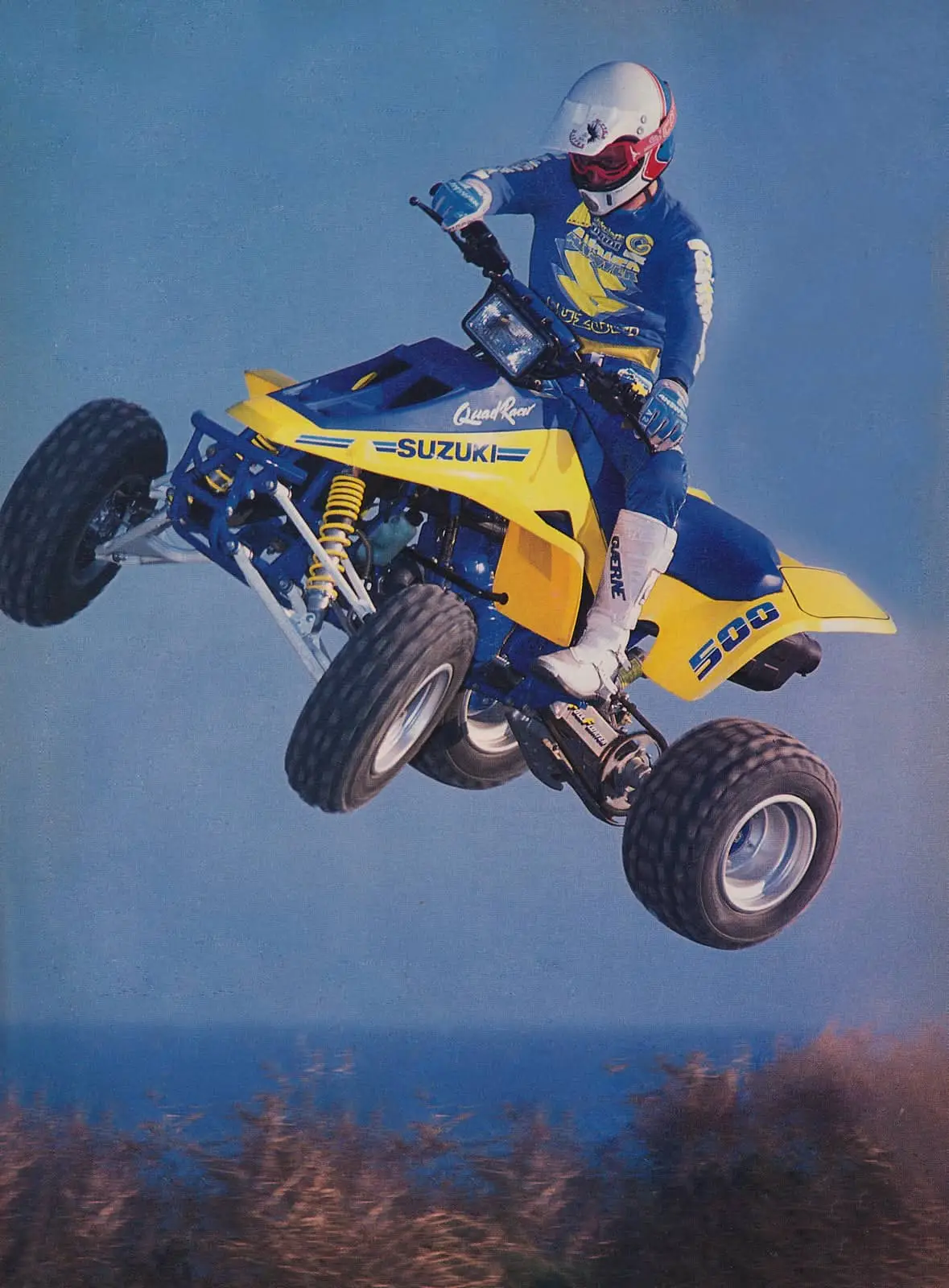
By the mid-1980s, Suzuki was already well established in the quad world. With the LT250R Quadracer, the Japanese brand had produced the first true high-performance production quad.
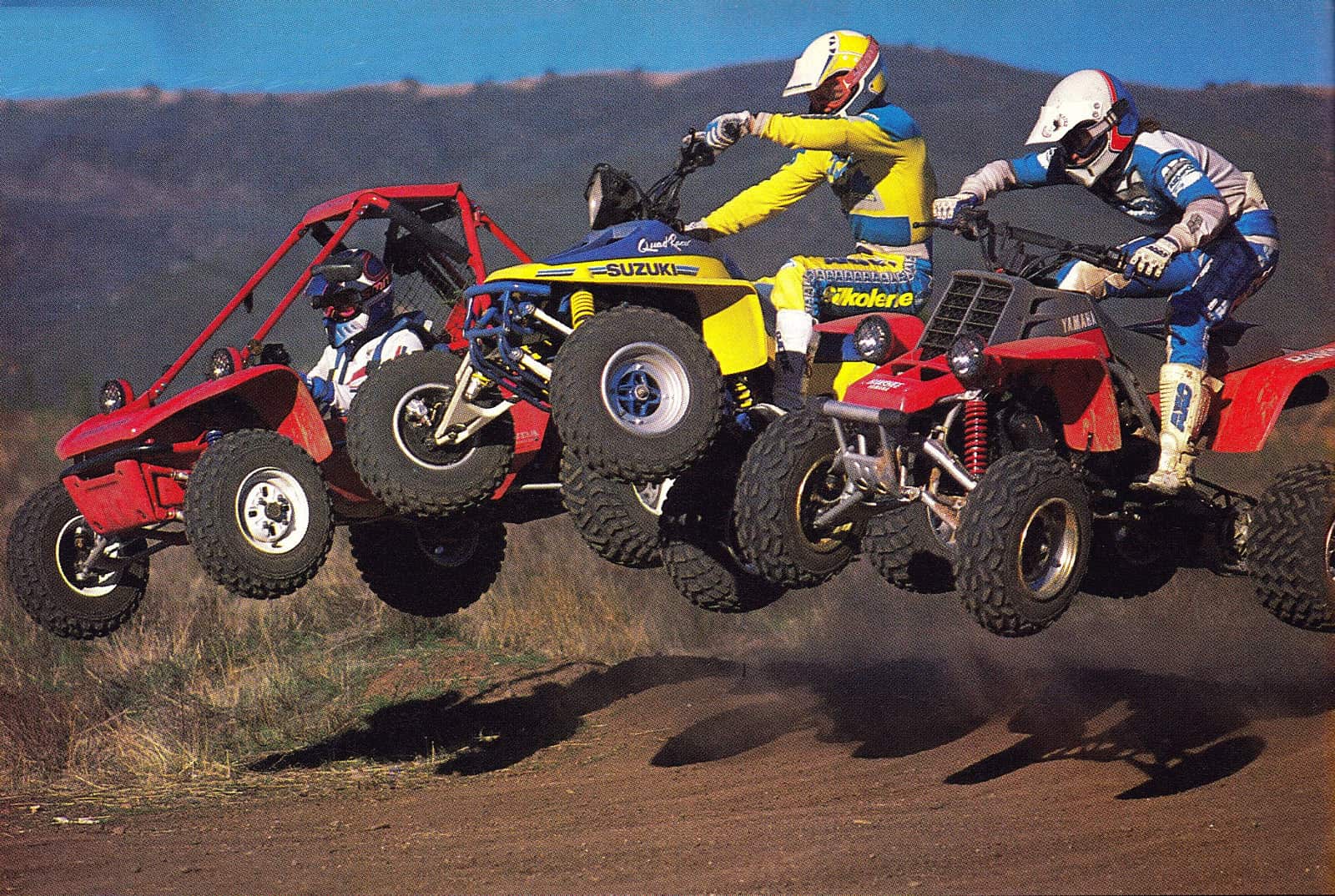
But the engineers in Toyokawa wanted to go further. Their goal was ambitious: build a machine that would scare people. A race-ready quad designed to humiliate Yamaha’s rising star—the Banshee. I encourage you to read my colleague’s column on that historic machine as well.
In 1987, the thunder struck: Suzuki unveiled the LT500R, the same year Yamaha launched its twin-cylinder two-stroke brute. Under its imposing bodywork hid a liquid-cooled, single cylinder, 499 cc two-stroke engine, producing nearly 50 horsepower.
In 1987, that was outrageous power for a stock quad. And it wasn’t just about the numbers: the raw character of the engine, vibrations that could raise your heartbeat, and the distinctive scream of its exhaust. Everything about it screamed excess.
No surprise that specialized magazines quickly nicknamed it “Quadzilla,” a blend of “quad” and “Godzilla.”
LT500R Quadzilla: A Machine of Excess and Raw Power
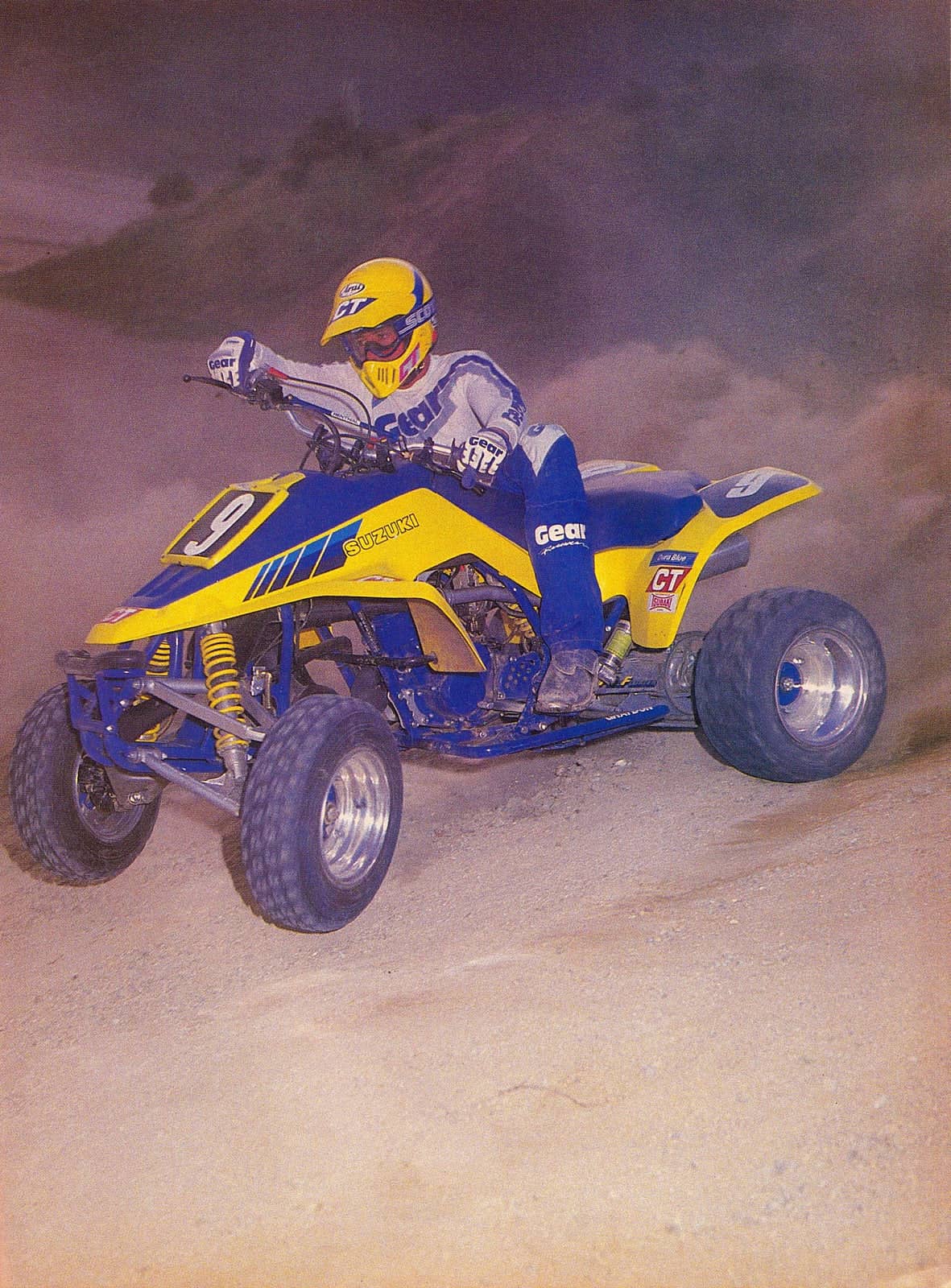
The LT500R wasn’t just powerful—it was radical:
- Top speed: around 130 km/h (depending on setup and conditions), insane for a late-80s quad
- Transmission: 5-speed manual gearbox, a bit demanding but precise
- Suspension: performance Showa shocks, dual A-arms up front, and a “Full Floater” linkage swingarm in the rear
- Brakes: triple hydraulic disc brakes, essential to tame the beast
- Chassis: very robust, but not always up to the engine’s power
Even its ergonomics were unconventional: the T-shaped seat allowed riders to shift weight easily in turns. Long, wide, and low, its overall size gave the quad an aggressive, intimidating look.
In short, the Quadracer 500 wasn’t made for everyone. It was a demanding, almost violent quad that left little room for error. But for skilled riders, it delivered a feeling of invincibility—like taming a wild creature ready to devour everything in its path.
The Flaws of the Suzuki LT500R: The Beast Had Limits
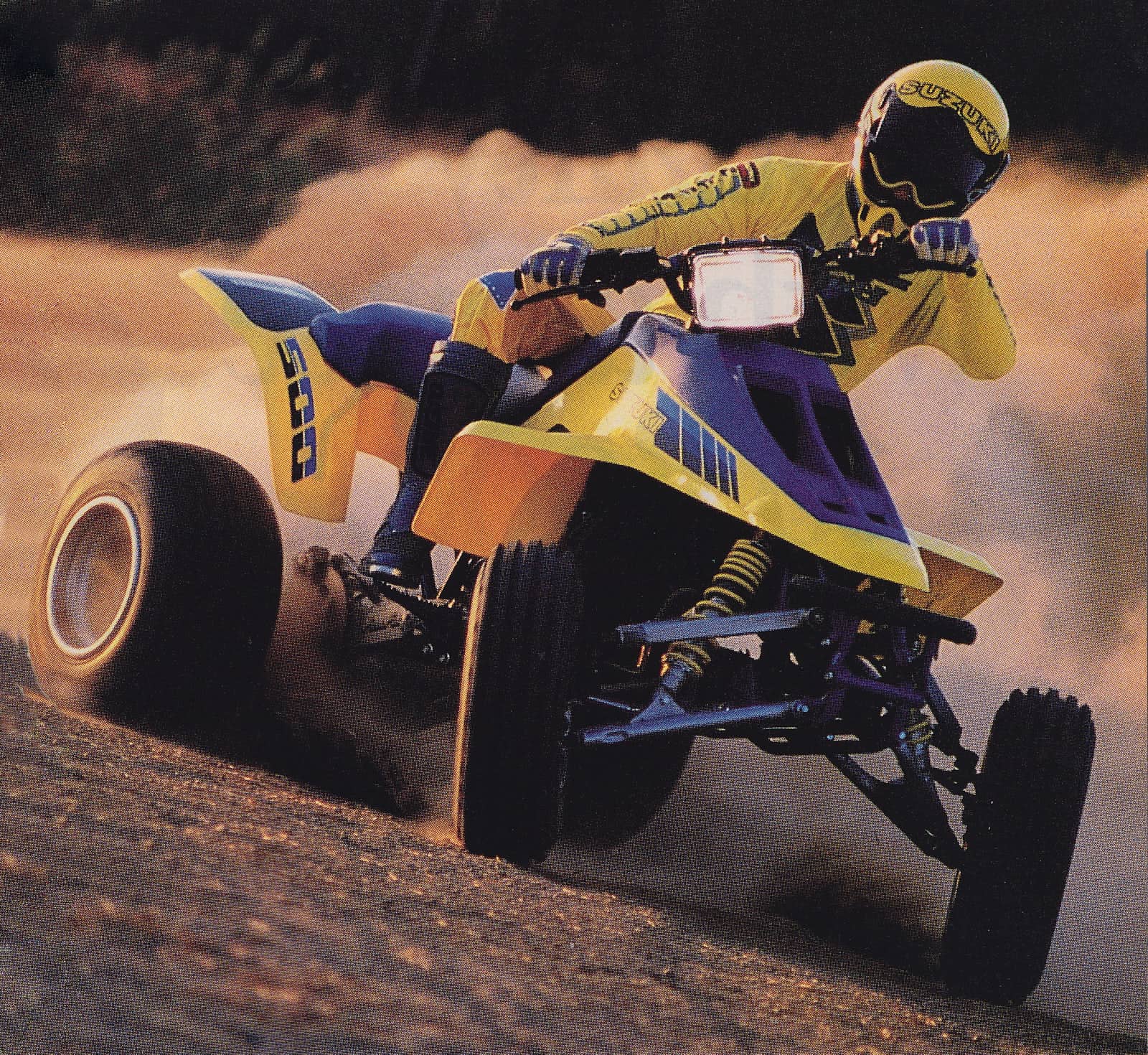
No quad is perfect—not even a legend like the Quadzilla.
Unreliable early version
The 1987 model, with its 6-bolt cylinder head, suffered frequent head gasket leaks. Suzuki fixed this in 1988 by switching to a 7-bolt head.
Weight
At 178 kg (392 lbs) dry, the LT500R was heavy. Compared to more agile competitors, it could be tricky to handle in technical terrain.
Fuel Consumption
The 13 L tank emptied almost before your eyes. No surprise, given the size of the two-stroke engine.
Brutal Power Delivery
Power came on hard and fast. For inexperienced riders, it was borderline unmanageable.
Environmental regulations
By the late 1980s, emissions standards were tightening, and a 500 cc two-stroke was, well… smoky—just like your grandma’s old stove.
In short, the Quadzilla was a weapon in the hands of an expert but dangerous in the wrong ones.
A Short but Intense Career for the Quadzilla
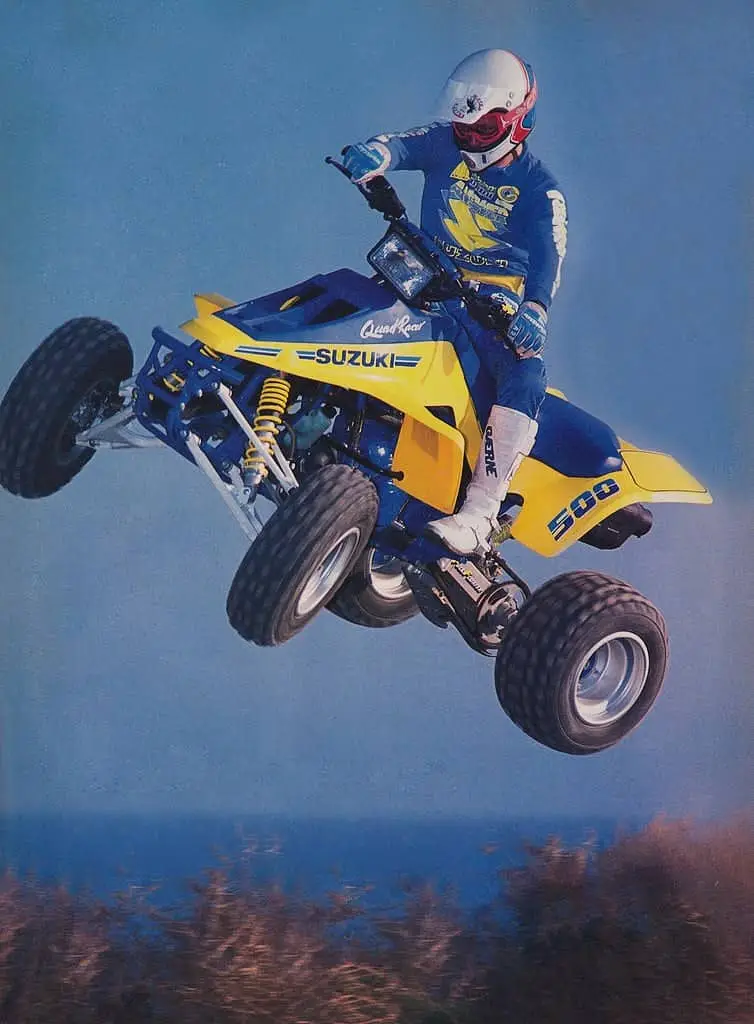
Despite its strengths and fearsome reputation, the LT500R only lived for four years. From 1987 to 1990, Suzuki made small tweaks, mostly to improve reliability. But the verdict was in: the Quadzilla was too extreme to appeal to the masses. At that time, the sports quad market was shifting toward more user-friendly four-strokes—easier to ride, more versatile, and cleaner.
By 1990, Suzuki pulled the plug. The Quadzilla disappeared from the lineup just as its legend was born.
The Legacy of the Quadzilla: An Icon of the ’80s
Nearly 40 years later, the LT500R remains an icon. Collectors fight over clean examples, often for astronomical prices. A friend of mine was even offered $25,000 for his freshly restored Quadzilla.
Why such fascination?
Because it embodies an era when manufacturers dared to build insane machines. It represents the pursuit of raw performance—unfiltered and unregulated. And despite its flaws, the Quadzilla delivers sensations few modern quads can match: brutality, pure thrill, indescribable vibration, fear, and adrenaline in a single twist of the throttle.
Advantages of the Suzuki LT500R Quadracer
- Phenomenal power (for its time)
- Absolute legendary status
- Simple, easy-to-modify mechanical design
- Unique character: brutal, wild, authentic
- Exceptional collector value
Drawbacks of the Quadzilla: A Demanding Beast
- Heavy weight and limited agility in tight terrain
- Average reliability, especially the 1987 model
- High fuel consumption
- Too demanding for beginners
- Short production run; parts are increasingly rare and expensive
The Suzuki LT500R Quadzilla: An Eternal Legend
The Quadracer 500 is more than just an ATV—it’s a time machine. Every kickstart, every puff of exhaust, every engine rev brings you straight back to the 1980s.
Performance came before regulations, and manufacturers’ boldness trumped reason. It represents a precise moment in industry history—the late ’80s, when Suzuki and its rivals waged an all-out power war.
We’ll likely never see such a machine come off a production line again, and that’s exactly what makes the LT500R so precious today. In a world where everything looks the same, the Quadzilla remains one of a kind.